
What Does It Mean to “Green the Church”? A Practical Definition & Your First 3 Steps
Aug 07, 2026This is part 1 in our knowledge resource series, written to help churches answer the Revivalist call to care for creation. You can visit https://www.greenthechurch.org/gtcred for more information.
There was a point when the moment a pastor would say “green the church,” someone in the room would roll their eyes. Not because people don’t care about creation. But because it sounded like one more obligation — one more special project stacked on top of bulletins, facility repairs, and the endless work of shepherding a community.
We get it. You’re tired. Your building is old. The heating system is unpredictable and someone just asked you to sign up for a sustainability certification.
Here’s what we mean when we say “green the church,” and it’s nothing like that.
Greening Your Church Quick Start List: Power + Protection + Stewardship + Community
When we say “green the church,” we mean turning your church building into an asset that serves your community better, costs less to operate, and stays powered when the grid fails. We mean making you less dependent on utility companies and rate hikes and honoring your calling to care for creation without guilt or shame, just smart, practical action.
Greening your church is about four things:
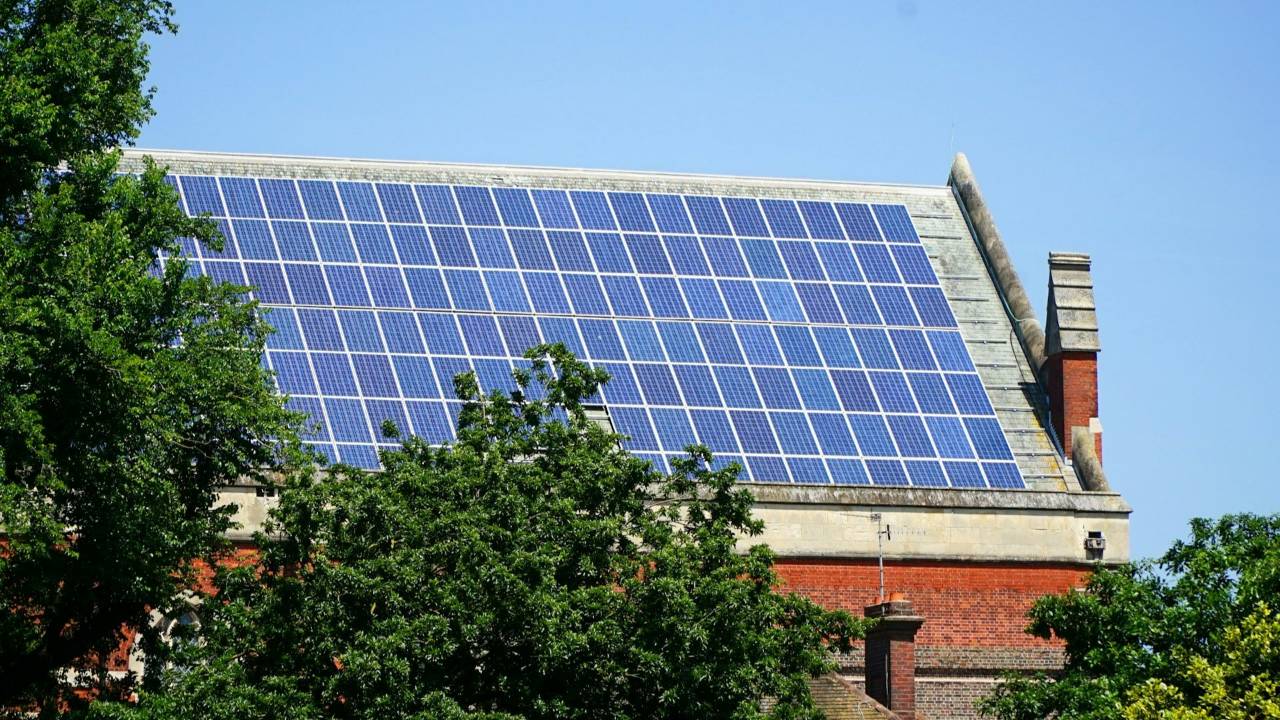
- Energy Independence: Solar panels and battery storage mean your church keeps running during blackouts. No more wondering if you’ll be able to open your doors when your community needs you most. After the Texas Winter Storm in 2021, churches with solar and battery backup were the only warm, powered buildings in entire neighborhoods. They became shelters, charging stations, and places of hope.
- Financial Strength: A 30 to 50% reduction in energy costs means real money stays in your operating budget. Money that can be used for missions, staff, youth programs, and community outreach. An EV charging hub can generate around $20,000 to $30,000 per charging station in its first year, with 80% going directly to your church. With regular customers in a high-demand area and 6 to 8 stations, that can scale to $400,000+ in annual revenue. That’s a substantial source of revenue.
- Community Resilience: Your building becomes a shelter in times of emergency. During grid failures, your church is the place with power, water, climate control, and connection. You become the backbone as well as the heart of your neighborhood.
- Faithful Stewardship: You’re answering your calling to care for creation and it positions your church as a leader in environmental and health justice. This isn’t preachy, it’s practical.
Three Steps You Can Take This Month
You don’t need a master plan or a $1 million capital campaign to start. You need some simple first steps.
Step 1: Schedule a Free Energy Audit
An energy audit is a professional walkthrough of your building. Someone comes in and takes a look at your heating, cooling, lighting, insulation, and electrical systems. They measure how much energy you’re using, including your biggest sources of consumption.
After their analysis, the inspector provides you with a report with specific recommendations and real numbers, such as by saying “You can save $8,000 a year by upgrading your HVAC,” or “LED lighting retrofits will reduce electricity by 40% and pay for themselves in 18 months.”
You may also be presented with a range of solutions along with different budgets and savings projections. All of this information is provided free, with no obligation to act on it. Your organization can review the report, consider the presented options at your own pace, and build a plan to upgrade at your own discretion.
This audit is the entry point for every church we work with. It all starts with a quick inspection. Call (510) 369-3541 or email [email protected] to schedule one for your facility.
Step 2: Form a Green Team
Giving people official “Green Team” roles assigns accountability while making the most of people's interests and skills. The Green Team acts as your advisors and project coordinators, helping you prioritize, decide between options, and communicate with the greater congregation.
These teams don't have to be big. They can consist of three or four people: a facilities person, a finance person, someone from your pastoral staff, maybe a passionate congregation member. They can meet for an hour or so once a month to review the possible first steps, discuss priorities, and keep momentum going.
The most effective Green Teams don’t view sustainability as a separate mission. They see it as stewardship, financial health, community resilience, and pastoral care all wrapped into one. They invite people into the vision.
Step 3: Start Small + Document Impact
Pick one quick win from the list of recommended improvements generated from your audit. Maybe it’s switching your main sanctuary to LED bulbs, sealing air leaks around windows, or installing faucet aerators in bathrooms — something that costs under $1,000 and delivers a visible result.
Why start small? Because momentum matters. When your congregation sees the lights on the altar look better, or feels the heating respond faster, or reads in the bulletin that you saved 1,200 kWh last month, they start believing in the vision. Small actions build into generational impact.
What Comes Next
After the audit and the Green Team launch, you’ll have real data. Maybe solar makes sense. Maybe having battery backup is your priority. Maybe you want to explore an EV charging hub that generates revenue and serves your community.
At that point, you’ll be moving toward something specific your team understands, something your congregation is ready for, and something that serves both stewardship and survival.
You can turn to your report for ideas on what should take place next:
- Actionable Recommendations (Ranked by ROI): The audit doesn’t just list problems. It ranks recommendations by return on investment. “Upgrading your boiler will cost $8,000 and save you $2,400 a year, so it pays for itself in 3.3 years.” This lets you make smart decisions about what to prioritize.
- Solar Readiness Assessment: If you’re thinking about solar, the audit tells you if your roof is suitable, what direction it faces, how much shading there is, and what size system would make sense. This is critical data for your solar decision.
Church Audit Preparation Checklist
Before your auditor arrives, prepare these items. It helps them work faster and results in better, more accurate recommendations:
- 12 months of utility bills (electric, gas, water). Most utilities can email or mail these.
- Building blueprints or floorplans (if available). Not essential, but helpful.
- Maintenance records for HVAC, hot water heater, boiler, etc. and any recent repairs or upgrades.
- Photos of your roof and south-facing walls, especially if you're considering solar.
- List of any planned facility projects or concerns (e.g., “The youth room is always cold” or “We want to add an EV charger”).
- Occupancy schedule, meaning when the building is in use, how many people are typically present, and peak usage times.
Next Steps After the Audit
Once you have the audit report, your trustees and finance committee can make informed decisions. You can prioritize projects based on ROI. You’ll understand which upgrades qualify for state energy efficiency rebates or tax credits. And if solar is in your future, you’ll know exactly what system size and configuration makes sense for your building and budget.
An energy audit gives you the information and freedom to make smart, confident moves. It’s the foundation for everything else.
Interested in learning more? Visit https://www.greenthechurch.org/gtcred or contact us online today, and we'll help you schedule an energy audit to get everything started.
